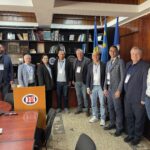
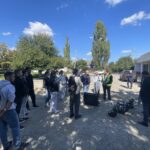
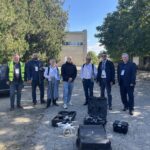
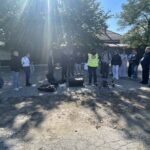
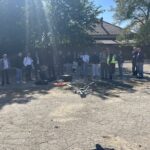
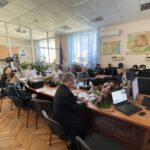
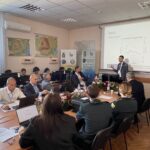
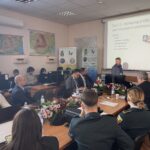
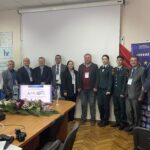
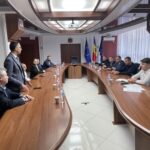
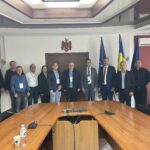
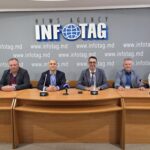
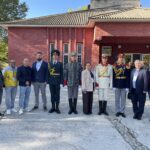
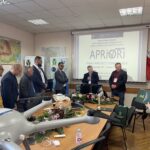
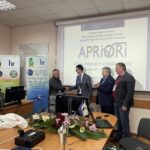
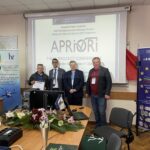
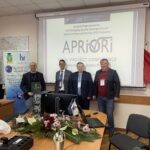
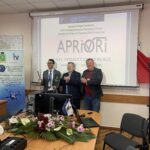
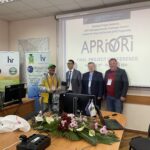
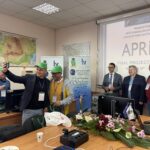
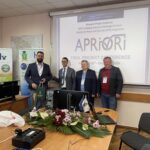
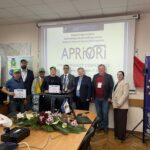
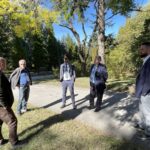
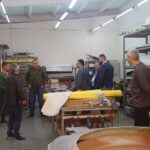
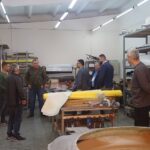
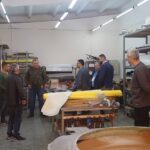
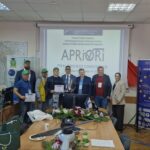
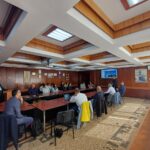
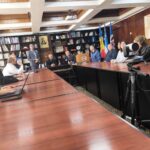
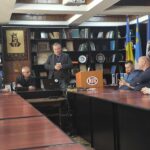
From 30 September to 4 October 2026, the Moldova State University (MSU), through the Institute of Applied Physics and the Scientific Research Laboratory “Environmental Physics and Modelling of Complex Systems” (ePhysMCS), hosted the final meeting of the international research project APRIORI, “Advanced Technologies for Physical Resilience of Critical Infrastructures”, grant number G6140.
The project, implemented from 1 November 2023 to 31 October 2026, was funded under the NATO Science for Peace and Security (SPS) Programme. The final event brought together project partners, researchers, experts, and representatives of partner institutions and end users from the Republic of Moldova.
The main objective of the project was to strengthen the resilience of critical infrastructures in the Republic of Moldova and NATO countries through the development and application of advanced methods and technologies for monitoring, assessment, and risk management.
The project was coordinated by Prof. Luca De Vito of the University of Sannio in Benevento, Italy, with the Moldova State University acting as co-directing institution. Activities at MSU were coordinated by Dr. Veaceslav Sprincean, Associate Professor at the Faculty of Physics and Engineering. The consortium also included the University of Cassino and Southern Lazio (Italy), the University of Žilina (Slovakia) and Riga Technical University (Latvia).
The research covered the entire critical infrastructure resilience management cycle, from planning and training to threat monitoring and assessment, risk modelling and analysis. Over the three years, the partner teams developed methodologies and procedures to enhance resilience, as well as concrete technological solutions: an advanced web-based resilience assessment tool, technologies for radio frequency spectrum monitoring and assessment of related threats, and robotic platforms for the inspection and surveillance of critical infrastructures, including UAV platforms. Together, these results lay the foundation for modern mechanisms to identify, monitor and assess risks that may affect strategically important sites.
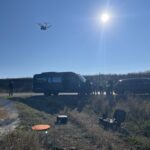
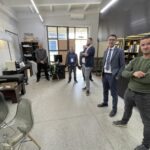
For MSU, one of the project’s most important achievements is the upgrade of the ePhysMCS Laboratory’s research infrastructure, with an investment of approximately 1 million lei. These investments have expanded the laboratory’s research capabilities and created better conditions for experimental and applied studies. As part of this, an integrated drone-mounted LiDAR system was acquired, together with the necessary accessories and software, enabling simultaneous localization and mapping (SLAM). The equipment, worth EUR 51,000 (VAT included), was purchased from the APRIORI project budget. The system is used to extend the existing capabilities of the eALERT monitoring platform and is intended for the surveillance and mapping of disaster-affected areas, as well as for joint research on critical infrastructures carried out with project partners and end users.
The programme of the final meeting included presentations of the main scientific and technological results, structured according to work packages WP1–WP4. The WP4 activities were presented by Erika Ottaviano, Veaceslav Sprincean and Marianna Savva. The sessions were followed by discussions on the exploitation of the results, their sustainability after the end of the project and prospects for future collaboration.
Since the project results were oriented towards the needs of end users in the Republic of Moldova (the State Enterprise “Moldelectrica”, the “Alexandru cel Bun” Military Academy of the Armed Forces, and the companies DanAero/Saves Grup and Pride System), a significant part of the agenda was dedicated to meetings with beneficiaries and local partners.
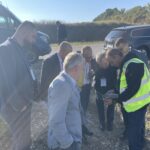
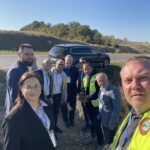
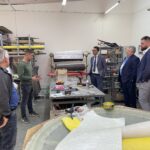
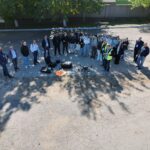
At Comrat State University, the project results were disseminated to representatives of institutions from the south of the country, while during the visit to the State Enterprise “Moldelectrica”, techniques for monitoring high-voltage power lines were presented. The delegation also visited the “Alexandru cel Bun” Military Academy of the Armed Forces and the company DanAero, and the head of Pride System, Mr. Alexei Leu, took part in the meetings held at USM. As end users of the APRIORI project, these institutions delivered technical presentations on how the solutions developed can be integrated into their practical work.
The implementation of the APRIORI project has strengthened the international scientific cooperation of the Moldova State University and contributed to developing researchers’ expertise in advanced technologies and in risk monitoring, modelling and assessment. The partnership with academic institutions from Italy, Slovakia and Latvia has opened new opportunities for exchanging experience and conducting joint research. The final meeting was not only a moment to take stock, but also a platform for identifying new research directions in the field of critical infrastructure resilience and UAV systems. The results achieved and the upgraded laboratory infrastructure provide a solid foundation for further research and for developing new technical solutions for the security and protection of critical infrastructures, as well as for new joint scientific research projects with partners from the European Union.
The MSU team sincerely thanks all project partners, colleagues and institutions involved for their fruitful collaboration and their contribution to achieving the project’s objectives.